

Following a risk assessment in 2007, a Council Decision of 2008 introduced controls on BZP in the European Union. There are several routes to the synthesis of mCPP, the most common of which is the reaction of diethanolamine with m-chloroaniline. Other methods involve the reaction of m-chloroaniline with bis(2-chloroethyl)amine or the reaction of piperazine with m-dichlorobenzene. The other two isomers of CPP could be made in a similar way.It is unlikely that the mCPP found in illicit products has been synthesised in clandestine laboratories since it is available commercially as the base or as the hydrochloride salt. Piperazines are capable of disrupting a person’s ability to think, communicate, and act sensibly. As with other mind-altering substances, use of BZP or TFMPP may jeopardize work or school performance, ruin relationships, and increase the likelihood of involvements in accidents.
About BZP/piperazines
Loss of control or inappropriate behavior may cause other people to view the user with suspicion. Addiction can lead the user to abandon educational goals and engage in criminal activity. Since the early 1950s, piperazines have been used widely by veterinarians as an anthelmintic drug. In humans, piperazine citrate serves a similar function and is used to treat pinworm and roundworm infestations in adults and children.
Products And Services
We sought to assess more comprehensively the results of such decisions for newly emerging drugs. Findings (i) The rate of emergence of new drugs has been fairly steady. (ii) There is broad cross-national agreement on what should be scheduled.
Derivatives
- Loss of substrate was determined by analysing pre- and post-incubation concentrations in the samples by using HPLC/UV analysis.
- Victoria, the last state in which it was legal, changed its classification on 1 September 2006,42 when BZP and piperazine analogs become illegal in the federal schedules, which are enacted by all Australian states and territories.
- This study aimed to determine whether predictions can be made about global interactions between ‘party pills’ constituents and other drugs metabolised by the same cytochrome P450 (CYP) isoenzymes.
- Other animal experiments suggest that the use of piperazines can actually inhibit learning.
- (Oddly enough, the pills contain no herbs.) The staff of New Zealand’s Christchurch Hospital, according to a New Zealand Press article, said that piperazine users admitted for emergency treatment “were usually young women in their late teens or early twenties.”
- There is no sure way of knowing the exact dose of BZP and/or TFMPP in tablet form because all of the pills are made in illegal labs.
Basic pharmacokinetic properties are described for both BZP and TFMPP when taken alone and in combination. Several studies have shown that these drugs cause several drug-drug interactions. Following oral administration of mCPP to healthy human male volunteers, the elimination half-life ranges from 2.6 to 6.1 hours with a wide variation in peak blood levels and bioavailability. The hydroxy metabolites are partly excreted as the corresponding glucuronides and/or sulphates, and the chloroanilines are partly excreted as the acetylated derivatives. Physiological and subjective effects reach their peak 1 to 2 hours after oral administration and can last 4 to 8 hours.
Reactions With Other Drugs Or Substances
Muscle stiffness, uncontrollable shaking, jaw clenching, and nervous tics may occur in users. In late 2004 and early 2005, it was being sold over-the-counter in New Zealand as an herbal party pill. (Oddly enough, the pills contain no herbs.) The staff of New Zealand’s Christchurch Hospital, according to a New Zealand Press article, said that piperazine users admitted for emergency treatment “were usually young women in their late teens or early twenties.”
An In Vitro Study Of The Neurotoxic Effects Of N-Benzylpiperazine: A Designer Drug Of Abuse
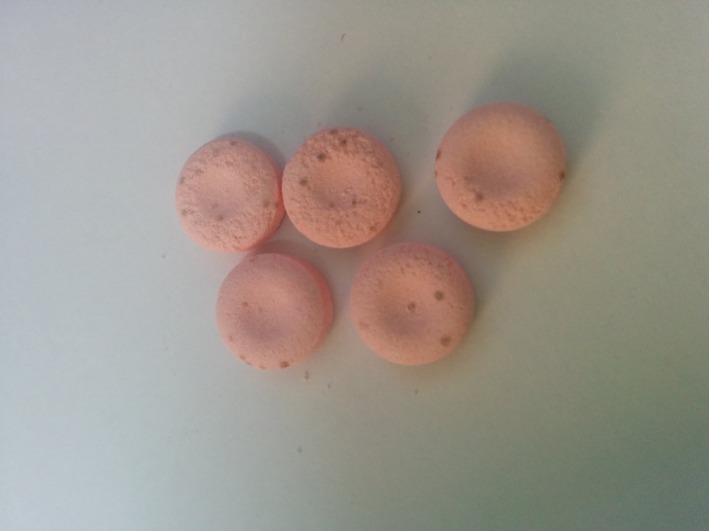
Schedule I is reserved for the most dangerous drugs that have no recognized medical use. Most illicit piperazines are sold in tablet form and contain both BZP and TFMPP. There is no sure way of knowing the exact dose of BZP and/or TFMPP in tablet form because all of the pills are made in illegal labs. Frequent users usually take anywhere from 35 milligrams to 150 milligrams at a time.
BZP itself was initially developed as a potential antidepressant drug, but was found to have similar properties to amphetamine and therefore liable to abuse. In the 1980s, it was used in Hungary to manufacture piberaline, a substance marketed as an antidepressant, but later withdrawn 2. In the late 1990s, BZP emerged in New Zealand as a ‘legal alternative’ for MDMA and methamphetamine 3. In Europe, its use was first reported in Sweden in 1999, but it only became widespread as a NPS from 2004 onwards until controls over the substance were introduced in 2008, in the European Union 4.
Party Pills

However, little is known about their toxic effects and risks. Therefore, we determined the most frequently occurring NPS in The Netherlands and combined this with data regarding drug-related intoxications. Data from the Drugs Information and Monitoring System (DIMS) and the Dutch Poisons Information Centre (DPIC) were combined and jointly analyzed. The number of drug samples submitted to DIMS for analysis containing NPS increased from 22 in 2007 to 431 samples in 2013. The most frequently submitted NPS in 2013 included 4-bromo-2,5-dimethoxyphenethylamine (2C-B), 4-fluoroamphetamine (4-FA), methoxetamine (MXE) and 6-(2-aminopropyl)benzofuran (6-APB). From 2012 onwards, the number of NPS bought as drug of choice exceeded those appearing as adulterants in established drugs.
- Opioids belong to a chemically diverse group of central nervous system depressants.
- Not only have BZP and TFMPP tablets been found among bags of ecstasy (MDMA) tablets, the powders of all three drugs have been found mixed together in drugs being passed off as pure ecstasy.
- Sometimes these effects are considered pleasant by the user.
- Part of the drug is broken down by the actions of the liver and kidneys, and the rest is released from the body as urine.
- New Zealand has classified BZP-based party pills as a “Restricted Substance” by the Misuse of Drugs Act and restricted to those over 18 years.
A DEA “Drug Intelligence Brief” described the drug-related death of a 23-year-old woman in Zurich, Switzerland, after she had consumed both BZP and ecstasy. Medical evidence suggests that the drug combination made her extremely thirsty. Before going into a coma, she consumed 10 liters of water in just 15 hours. The young woman experienced high blood pressure and brain swelling prior to her death.
When the drug is stopped altogether, a “rebound effect” on the appetite center of the brain may occur, leading to excessive eating and weight gain. In the United States, BZP is usually imported in powder form and then manufactured into pills. Several hundred pounds of powdered BZP have been seized from India. Busts have been made for possession and use of piperazines throughout the United States, especially in California, Connecticut, and Texas. Whilst it has been linked to a number of fatalities in association with BZP, there are no documented cases of it being toxic in its own right 1.
The chemical composition of substances sold as piperazines are changing all the time, which is why you can never be sure of what you’re getting and how it could affect you. Neither BZP nor any other piperazines are under international control, although several (BZP, TFMPP, mCPP, MDBP) were pre-reviewed by the WHO Expert Committee on Drug Dependence in 2012. Several countries have introduced national control measures over piperazines. Peters, F.T., Schaefer, S., Staack, R.F., Kraemer, T., Maurer, H.H. (2003), ‘Screening for and validated quantification of amphetamines and of amphetamine- and piperazine-derived designer drugs in human blood plasma by gas chromatography/mass spectrometry’, Journal of Mass Spectrometry, Volume 38, No 6, pp. 659–76.
It can be manufactured by reacting piperazine monohydrochloride with benzyl chloride. The latter precursor is readily available, and piperazine monohydrochloride is easily produced from the commercially-available salts. It is known that 1,4-dibenzylpiperazine (DBZP) can be formed as a side-product in this reaction. On March 18, 2004, the DEA officially classified BZP as a Schedule I drug, so its use in the United States is now regulated by federal law.