
As an energy hub, Turkey is strategically situated for the illegal trade and lost an estimated US$5 billion in tax revenue in 2017. In Southeast Asia, about 3 percent of the fuel consumed is sourced from the black market, estimated to be worth up to US$10 billion a year. A flourishing black market is no surprise, with about US$133 billion worth of fuels stolen or adulterated every year.
The size of the black market in Japan has been declining ever since the late, the 90s yet it is still claimed as the sixth largest black market in the world, accounting to 108.3billions of US dollars. Most of the troublemakers are those who do not pay applied taxes to the government and makes illegal transactions within or across the country. A significant amount of cash is in circulation between the black market’s major stakeholders.
TOP TEN COUNTRIES HAVING LARGEST BLACK MARKETS IN THE WORLD
Grey markets differ in that they are not illegal, but they are not authorised or controlled in the usual way. There are a range of markets available to buyers and sellers that allow them to exchange goods and services. The unrecorded economy refers to economic activities that circumvent the institutional rules that define the reporting requirements of government statistical agencies. Smugglers and black marketeers can be the only source of food and medicine to starving people in war-torn regions. Other times, the black economy can represent a clear net economic gain to society that circumvents or compensates for economic problems created by government policy. Those engaged in underground economic activities circumvent, escape, or are excluded from the institutional system of rules, rights, regulations, and enforcement penalties that govern above-board parties engaged in production and exchange.
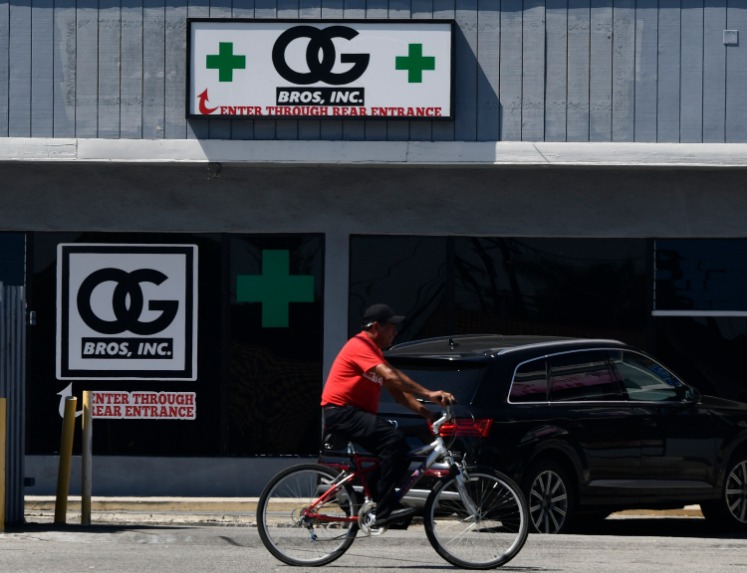
Black Market Weed Thrives, Raising Questions For Consumers
A warranty is a promise by the seller to help fix a broken faucet, usually by providing a replacement or the parts necessary to do so. Most hosted sellers do not provide any warranty on the faucets they sell. It is just a matter of requiring sellers to produce listing certificate identification numbers, then confirming the certification online.
This episode illustrates the relationship between the black market and the mainstream American economy. The term began to be used widely during World War II (1939–45), when strict government rationing was widespread in Europe and illegal trade flourished. As with other trading, currency exchange (the conversion of one country’s currency to another’s, such as the conversion of British sterling into U.S. dollars) occurs on the black market in order to avoid government fees and regulations. An extensive black market in smuggled tea quickly arose, enabling merchants to avoid the tax and sell more tea at lower prices. Many goods and services are simply illegal to sell; examples include cocaine, assault rifles, prostitution, the body parts of endangered animals, fake passports, and bootlegged (illegally recorded) CDs and DVDs. The commission exonerated General S. R. Curtis of using his position to obtain and sell cotton in violation of regulations, but the testimony confirmed the existence of a thriving and extremely profitable black market in cotton and supplies.
California laws are more restrictive than the federal laws that govern the rest of the country. Canadian law prohibits the “sale or lease” of uncertified faucets in that Country. The penalty for importing, selling, or offering to sell a faucet that does not meet maximum flow limits or that has not been certified is $560.00 per day for each non-compliant faucet distributed in commerce.
Goods that are either restricted or banned, like pornography or content related to race, religion, and ethnicity, often end up on the black market. Stolen goods are difficult to resell in the legal market due to the absence of official documentation. It often intersects with other illicit trades like drug and arms trafficking, perpetuating a cycle of abuse and violence. The black market presents considerable financial risks due to its unregulated nature and lack of consumer protection.

Illegally Logged Timber
Now, you can have places where there’s quite a big group of cases where the donor comes from a different region, the recipient comes from a different region, the organization is located in another region. “So, it’s not one country or two countries, it’s neighboring countries. More international partnership took hold in 2008 with the Declaration of Istanbul (DOI), created to further influence government compliance.
Black Markets In Society
Fighting against the diversion of our tobacco and novel products is a key component of our sustainability program. Governments are losing billions in tax revenues, legitimate businesses are being undermined, and consumers are being exposed to poorly made and unregulated products. Illicit trade is a serious and growing threat to society. If you want to buy one as a decorative accent to display on your fireplace mantel, it’s perfectly legal to do so. They don’t provide warranty service for their hosted sellers and don’t keep replacement parts.
Is Enforcement The Answer?
One of the only ways people facing these circumstances can earn money is by working in the shadow economy. People without legal status often find themselves working for cash in the underground economy. The reasons that underground economies exist are numerous, but trends indicate that how economically developed an area is dictates how strong (or weak) its shadow economy will be. For example, in a 2019 study, Leandro Medina and Friedrich Schneider found that in countries like Bolivia, the underground economy averaged 62.9% of GDP. So, many people turn to marketplaces that operate anonymously and provide them with a way to earn money or find what they want undetected.
Of the big-box lumber stores, only Menards has so far avoided selling illegal faucets. It did affect direct sales but its impact was vastly outweighed by the enormous expansion of products offered for sale on the platform and the increased income derived from providing services to hosted sellers. Launched in September 2022, Torzon Market operates on the Tor network and features over 11,600 illegal products, including drugs and hacking tools.
How Can Effective Regulation Combat Illicit Trade?
Our team searched the dark web and put together a list of the most active dark web marketplaces in order to assist you in monitoring illegal trade of products, cybercrime activity, and dark web trends in the dark web space. The illegal trade will continue to thrive if the underlying economic and educational conditions that catalyze the market are not remedied. In addition to the Declaration of Istanbul, countries are attempting different measures to address the illegal organ trade. In Nepal, poverty has pushed people for decades to sell their kidneys to traffickers who then profit on the black market. Current attempts to prevent the growth of the online black market have proved unsuccessful as illegal operators can easily rebrand or create new identities to evade detection and continue operating. Both countries face high rates of gambling taxes.Last year’s White Paper urged the Gambling Commission (GC) to improve its knowledge on the black market, so more could be done to limit its reach.In total, the research revealed 15 per cent of those who regularly bet – around 2.8m people – had heard of at least one online black market site.The BGC has previously called on internet giants to cooperate with our members in the regulated market to prevent the growth of online black market gambling.

The illicit oil trade is a significant global security concern, as it provides substantial funding to dangerous non-state actors. Approximately 50% of all imports entering the region evade these taxes, resulting in substantial revenue losses for governments and hindering economic development (OECD). By targeting trade-based money laundering, stakeholders aim to disrupt the financial infrastructure that supports criminal networks and protect the integrity of global financial systems. These techniques make it challenging for authorities to detect and disrupt money laundering activities. Criminals exploit the complexity and volume of international trade to conceal the true nature of their transactions and commingle illicit funds with legitimate trade flows.
- Any paid work or transaction that does not pay employment taxes is part of the shadow economy.
- Nonetheless, many people deemed the plant to be harmless and continued buying and selling it illegally.
- However, governments have traditionally done much more than that as seen in such laws as the U.S. blue laws or the extensive provisions over domestic life seen in the Sharia law practiced in many Islamic countries.
- Advocates like Ortiz say the only fix now is no longer to try to stymie the trafficking or illegal shops, but full federal legalization and more licenses.
- With the rise of the internet, many underground market transactions are now done online, such as on the dark web using digital currencies.
- Regularly monitoring the top dark web markets gives your SOC team an insider’s view of the latest malware and phishing kit trends, plus real-time knowledge related to relevant compromised PII.
The total amount of the black economy of the country is about $68.59billions making it the third largest black markets Center in the whole of Asia. It has been argued that products only available on the black market, such as drugs, are not inherently bad, but are only labeled so by moralistic governments. The existence of black markets serves as an example of a larger debate over whether governments should attempt to legislate morality. Economists have argued that the vast black markets present in the world highlight the efficiency of markets and expose unused potential for revenue on the part of governments unwilling to indulge these markets. As illustrated above, there are many products and motivations for the creation of black markets. Despite ongoing law enforcement efforts to intercept illegal drug supplies, demand remains high, providing a large profit motive for organized criminal groups to ensure that drugs are available.
Collaboration Remains The Key To Success In The Fight Against Illicit Trade
But, 2014 has come and gone without action by the Chinese government. The strictest national standard is probably Germany’s which allows 10 ppb of lead in drinking water, twice the North American legal limit. The European Committee for Standardization (CEN) has been working toward a common European standard for several years but has found it difficult to find agreement among its member countries with widely varying water systems. The lead and toxic materials standards in other countries are much less rigorous. It must first be tested and certified by one of seven accredited testing organizations Note 7 to meet North American safety and reliability standards that are among the strictest in the world. Not just anything with a shiny finish used to control the flow of water can be legally sold as a faucet.
Weapons Trafficking
Online black markets have emerged as platforms for illegal trade, necessitating innovative approaches to enforcement. To combat trade-related black market activities in the digital age, governments and law enforcement agencies have embraced technological advancements themselves. Criminal organizations utilize the proceeds from black market transactions to fund other illegal activities, such as drug trafficking, human trafficking, and terrorism. The sale of illegal drugs, weapons, human trafficking, and the illegal wildlife trade is common in black markets.
This is especially true in less developed areas, where shadow markets tend to account for more of a percentage of gross domestic product than official economies. Shadow economies are nothing new—in fact, they have likely existed as long as there have been authorities controlling markets, the means of value exchange, and collecting taxes. The estimated size of the U.S. underground economy as a percentage of GDP. There’s an obvious complication in trying to determine the size of any country’s underground economy. In another estimate, economist Edgar Feige estimated that underground economic activity in the U.S. in 2009 totaled $2 trillion, approximately 12% of GDP (at that time).
The Consequences Of Failing To Certify Faucets
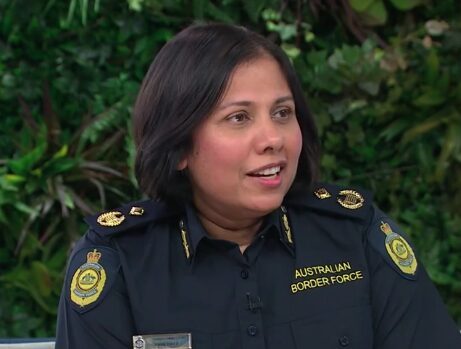
“Part of the problem is that there’s nothing wrong with these cigarettes at the point of manufacture. It’s difficult to seize them, it’s difficult to detain them because they’re not illegal.” She is one of the world’s foremost experts in the illicit trade. When Four Corners speaks to them, they deny any knowledge and say they have no link to black-market tobacco.