
Some believe that the anonymity of the Dark Web protects them from law enforcement. However, government agencies do monitor the Dark Web and work to crack down on criminal activity. Law enforcement uses special tools and employs cyber experts to track illegal behavior on the Dark Web. So while the deep web makes up the vast majority of the Internet, most of it is boring, private information. The dark web, a small subset of the deep web, is where most of the illegal and unethical content resides. But don’t worry, you’re very unlikely to stumble upon it by accident in your normal web browsing.
The Key Differences Between The Deep Web And Dark Web
While both these webs elude ordinary search tools, they vary in their reasons for doing so. The Hidden Web is concealed due to non-indexation while the Obscure Web remains hidden by design. He created the Silk Road, named the darknet market, and is imprisoned for selling narcotic and illegal products. These are basic steps that you need to follow to access the content.
Stay Up To Date On The Latest News
The anonymity offered by Tor allows both hosts and users to cloak their identities. By setting up the server correctly, hosts can even mask the location of their servers. Outlined below are the top five differences between the dark and deep web. On the internet, the deep web is not indexed by web crawlers, while the dark web is intentionally kept hidden. The person or group who has posted a webpage on the open web doesn’t care who has access to it or what can be done with it. To use a real-world example, you probably don’t care who in a large group knows your name or the color of your hair.
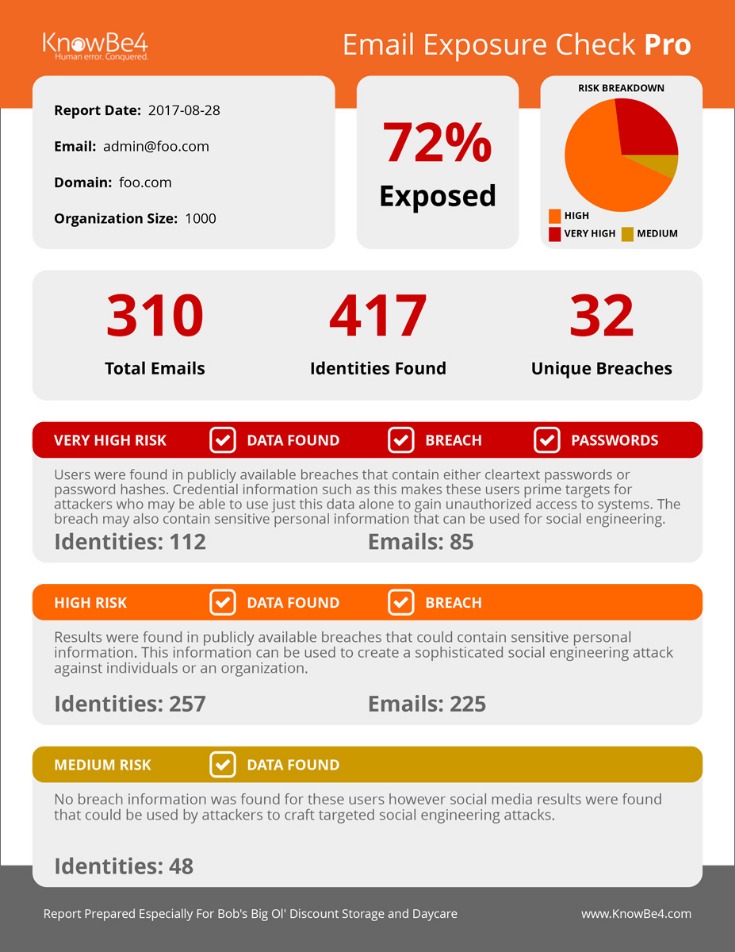
Web Hosting Company Increases Security Team Bandwidth With Up To 80% Decrease In Threat Research Times
Most dark websites are used for illegal and illicit activity, but a few legal sites exist. According to Brittanica, the dark web makes up 0.01% of the deep web. On the other hand, the dark web uses darknets like Tor, Freenet, Riffle or other anonymized and encrypted networks as the underlying technology. These networks live on the fringes of the hidden web, offering many layers of encryption to protect data in transit.
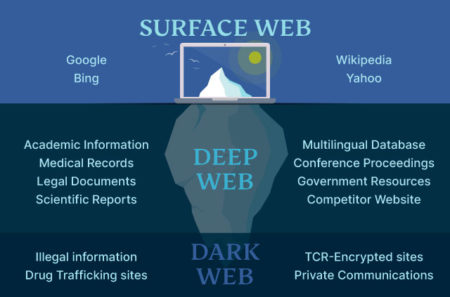
- However, the Surface Web represents only the tip of the iceberg when it comes to the internet – the majority of it is actually hidden.
- It’s no bad thing for data to be buried deep, invisible to those for whom it is not intended.
- Also contained within it are forums for discussion that include everything from hacking services to human trafficking.
- Still, considering the high costs of deep web data breaches and the vital importance of threat intelligence, it is essential to understand how hackers gain access to deep web assets in the first place.
- Our mission is to simplify navigation in the complex and evolving world of the darknet.
Threat Actor Profiles
- Keep reading to discover the differences between the deep web and dark web and what they mean for your online safety.
- Install Norton 360 Deluxe to help secure your device, block scams, and stay private online.
- Then, install Norton 360 Deluxe to get AI-powered scam detection to help secure your browsing against online threats.
- Some well-known underground sources can be easier to find because there are dedicated sites that share links and maintain regular status updates.
- However, there are estimates that this could be just 4-5 % (even less by some estimates) of the entire web.
If you’re taking a Cyber security training and placement course, grasping the difference between these two layers is crucial for threat detection, data protection, and ethical hacking. The key difference between the deep web and a dark web is that they both are different from the surface internet and cannot be accessed for general purposes. However, the deep web requires authorization and the dark web requires specific sets of tools and software for decryption.
The Deep Web, which includes sites accessible via normal browsers but not visible to search engines, makes up a much larger portion of the Internet. The Dark Web, which is only accessible via special web browsers, uses the same network infrastructure as the Surface and Deep Web but is completely distinct from it. What most people think of as the “Internet” or the world wide web is actually what is known as the Surface Web, or Clear Web. This is the part of the Internet that is visible to search engines like Google and accessible via normal web browsers.
Security teams often focus on dark web monitoring while overlooking equally critical deep web sources like GitHub or Telegram. However, threats can often originate in the deep web before escalating to the dark web. Contrastingly, Dark Internet is a relatively minute component of the Deep Internet. Comprising a suite of sites reachable to users, yet masking the servers’ IP addresses that host them, making it a challenge to locate the operators managing these sites. As the crux, the Dark Web nestles within the Deep Web, hosting its community of confidential networks that facilitate cryptic interactions, thus ensuring complete privacy. Get the latest updates on privacy, plus expert tips, and security guides to up your digital protection game.
Dark Web Vs Deep Web Monitoring: What Security Teams Need To Know
The ‘members only’ parts of public platforms are also a part of the deep web. It is the web that cannot be accessed by the search engines, like government private data, bank data, cloud data, etc. The “deep web” includes everything on the internet that is password-protected, paywalled, or even just protected from crawling by a site’s robots.txt file.
Common examples of surface layer content are google images, maps, YouTube videos, etc. Norton 360 Deluxe provides a comprehensive suite of protection that can help block malware and dangerous links in real time, and even detect scams using cutting-edge AI detection. Plus, it features a built-in VPN to encrypt your connection, hiding your IP address and online activity, for more anonymous and private browsing. Next, select a dark web search engine like DuckDuckGo that can help you find dark web websites that cannot be indexed by traditional surface web search engines, such as Google or Bing. Many dark internet users favor Tor which uses a network architecture originally developed by the U.S. Naval Research Lab as a system of decentralized, anonymous nodes to enable anonymous online communication.
The deep web refers to all internet content not indexed by standard search engines like Google or Bing. Understanding Deep Web vs Dark Web concepts helps cybersecurity teams decide where to focus resources, which tools to use, and how to protect enterprise data from unseen threats. Unlike the Deep Web, the Dark Web is a portion of the internet that’s intentionally hidden and only accessible using specialized tools like Tor (The Onion Router) or I2P (Invisible Internet Project). These tools anonymize the user’s identity and location, making their actions untraceable. Understanding the Deep Web vs Dark Web is not just a technical curiosity. It is an essential skill for anyone considering a future in cybersecurity.
Legal Vs Illegal Activities
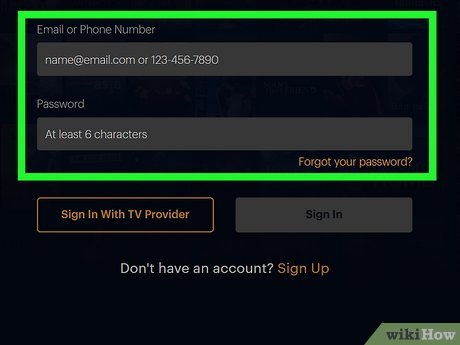
Deep Web refers to the entire web, whereas Dark Web is a part of the Deep Web that isn’t regulated and whose IP addresses are intentionally hidden. The Dark Web is a network of one of the largest online criminal and terrorist activities in the world. Unlike the Dark Web, sites on the Deep Web can be accessed using normal web browsers like Firefox, Google Chrome, and Safari. Also, these sites are often linked to publicly accessible pages, making them findable and accessible by users with the right login credentials and willingness to pay. For example, sites like Netflix are reachable from search engines, but the videos hosted on the site are only accessible to users who have created an account and paid a subscription fee. The terms “Deep Web” and “Dark Web” are often used interchangeably, but they are not the same.
Deep Web Vs Dark Web FAQs
It’s the part of the internet most people use daily, including news sites, blogs, online stores, and social media. Unlike the deep or dark web, you can access it easily without special access or tools. The deep web, also known as the hidden web, is the part of the internet where almost all online activity happens. The deep web consists of sites and databases that are not fully accessible to standard search engines such as Google, Bing and Yahoo.
Pages on the Deep Web are commonly protected by a login page, password, paywall, or other means of limiting access, and are designed to be private. Deep Web pages include personal pages like webmail inboxes and account pages on various sites. They also include internal company data and sites that are accessible via the Internet but protected by authentication. People often use the dark web to keep their online activity anonymous. And this increased protection is what can motivate cybercriminals to use the platform for illegal activity.
This includes personal email accounts, online banking portals, cloud storage, subscription services, and medical records — essentially, any page behind a login, paywall, or restricted access. The surface web is the most popular and accessible part of the Internet, involving all websites indexed through traditional search engines like Google and Bing. This includes social media, news sites, blogs, and e-commerce sites accessible to most users with minimal effort to find and access them, without special software or login credentials. The surface web hosts most online activity; hence, it would be a very lively space for the exchange of information and commerce. Users often turn to the dark web for private communication, whistleblowing, or accessing restricted information in censored regions. However, it’s also notorious for hosting illegal activities, including illicit marketplaces and hacker forums.
It includes databases, covert networks and other digital repositories not meant to be displayed in the public domain. In summary, both the Hidden Web and the Dark Web denotes parts of the internet indiscernible to search engines. While we don’t recommend you access the dark web, if you do decide to, make sure you take all the steps above to keep your data safe from cybercriminals. Although most people use the Tor browser to access the dark web, it can also be used free of charge to gain privacy while surfing the normal indexed web (clear web/surface web). The benefit of using Tor to surf the regular internet is that your activities will be private.
This lack of indexing of its content makes these layers of the internet less easily accessible and harder to navigate than the Surface Web. On the other hand, the dark web relies on anonymity and encryption to function. While this makes it a popular choice for privacy-focused users, it also opens the door to hidden risks.