

It offers a diverse mix of retail outlets such as cafes, boutiques, and different arts and crafts, from jewellery designs to wall art. The Backyard Market houses over 80 stalls in its bright and spacious warehouse, showcasing the best local arts and crafts. It’s located in the Old Truman Brewery above the Brick Lane Vintage Market and offers various products, including food and baked goods, vintage and handmade clothing, music, organic foods, arts, and bric-a-brac. The brick industry is positioned for continued evolution as innovation, environmental imperatives, and trade dynamics converge.
The residential construction segment leads the market with a size of $0.93 billion in 2023, anticipated to rise to $1.73 billion by 2033, capturing a significant market share. Infrastructure and industrial applications also see growth, with respective sizes of $0.19 billion and $0.25 billion in 2023. This market report provides comprehensive insights into the Brick industry, offering a detailed analysis of market sizes, key players, segmentation, and regional performance, as well as technology trends from 2023 to 2033.
A spokesperson for the City of Harrisburg confirmed construction began Monday at the site, which is located between Third and Sixth streets. Customize this report to your needs — add regions, segments, or data points, with 20% free customization. This is the first umbrella sky art instillation to ever debut in New England, for the third consecutive year. The canopy of floating umbrellas is located at Newport, Rhode Island’s Brick Market Place with production by ArtScape. Wall Street Market locations always strive to offer the lowest prices, best customer service, and we take pride in offering you a clean shopping environment. To address this, The Brick Market Foundation was established in 1989 with Ralph E. Carpenter, Jr. as president, and Ronald Dick as Vice President.
Global Brick Market, By Type Market Analysis (2024 –

Brick Lane and its surrounding streets provide the perfect place to snap a few pictures. Look out for Tatty Devine’s flagship jewellery store nestled at the north end of Brick Lane. Rokit 101 is another famous and long-standing vintage shop located along the shopping strip.

Map Marker Pin151 Swinburne Row, Newport, RI 02840
As European countries prioritize environmentally conscious building practices, the demand for bricks, with their versatility and green building potential, continues to grow, reflecting the region’s upward trajectory in the market. The global brick market will further evolve as construction technologies and sustainable building practices are invented. Increasing sensitivity towards the environment is going to stay in the trend and hence spur innovation within brick manufacturing processes in order to trim carbon footprint and improve energy efficiency. Also, regional regulatory policies and building codes will significantly contribute towards changing the market scenario and encouraging the adoption of green building materials such as bricks. The evolving consumer preferences and regulatory frameworks are also indicative of future landscapes that may take place within the global brick market.
Brick Lane Market
China and India spearhead masonry consumption as public-sector housing pushes converge with subway, airport, and industrial-park builds. Producers deploy tunnel kilns with waste-heat recovery to meet provincial emission caps and reduce coal dependence, safeguarding supply resiliency during demand spikes. As labor shortages intensify, builders in North America and Europe pivot toward volumetric modules that sideline brick facades.
Brick Market Size & Share Analysis – Growth Trends And Forecast (2025 –

Building applications accounted for 60% of brick market share in 2024, reflecting masonry’s historic role in structural walls and facades. The brick market size for path and paving solutions, however, is expanding at a 3.14% CAGR as households invest in outdoor upgrades and municipalities retrofit sidewalks to endure heavier pedestrian flows. Technological advances include char-based thin bricks exhibiting 4-7% water absorption, outperforming commercial peers and costing USD 25.83 per sq m, less than half the prevailing price for traditional options. Makers also promote hollow configurations that cut embodied CO₂ and lighten logistics loads. Collectively, these innovations reinforce the brick market goal of decarbonization without sacrificing structural reliability. Only a handful of early adopters own patents, hinting at near-term licensing revenue streams that could reshape profit pools within the brick industry.
- Bricks, by their very nature, have taken on a significant role in building structures for centuries and remain an essential element of architectural landscapes worldwide.
- Acme’s surplus inventory consists mainly of short runs of brick that are slightly off color or first-grade material that hasn’t sold – with special pricing on items in every size.
- There has already been some confusion over the groundbreaking date of the brick building, as it was initially scheduled for September, then pushed back to October, and is now slated for September again.
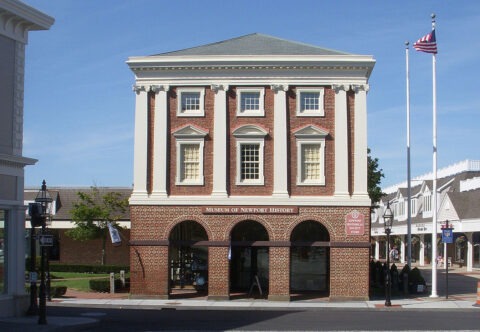
- Upon completion, the building consisted of an open-air market on the ground floor, similar to other contemporary New England marketplaces such as Faneuil Hall, while upper floors were used for offices and dry goods storage.
- Architectural innovation is creating significant opportunities in the bricks market by redefining traditional construction practices.
Take The Bus: Boston To Newport
Traditional brick production methods have seen limited advancements, potentially hindering the market’s ability to meet evolving demands in the construction industry. The absence of innovative approaches in material composition, energy efficiency, and sustainable practices may make bricks less attractive to architects, builders, and developers seeking modern, eco-friendly solutions. Growth in the brick industry is primarily driven by the increasing demand for residential and commercial construction, urbanization, and a rise in infrastructure projects, alongside technological advancements in manufacturing. Growth patterns in the South American and Middle East & African regions differ, driven by underlying factors currently caught between economic development, urban expansion, and government investment in infrastructure. This is ultimately impacting, through changing construction practices and preferred building materials, demand for bricks in these countries.
Brick Market Place
Clay bricks dominated the brick market with 65% of revenue in 2024, yet fly-ash bricks record a 3.22% CAGR through 2030, widening their presence in regions tightening carbon rules. This shift is anchored in industrial-waste utilization, enabling plants to cut firing temperatures by 20% and align with circular-economy mandates. The brick market size for fly-ash variants is forecast to expand faster than any other type, helped by public procurement criteria that reward recycled content. Calcium-silicate units attract architects pursuing thermal-mass advantages in Europe’s cool climates, while concrete blocks that skip kiln firing appeal where electricity is available and fuel security is uncertain. Market trends in the brick industry include a growing preference for sustainable materials, increased use of automation in production processes, and rising demand for customized brick solutions in construction projects.
On the basis of size-based segmentation, the market is categorized into modular, standard, and jumbo. The standard size bricks market is evolving to meet the demands of a changing construction landscape. Sustainability, architectural creativity, energy efficiency, digital tools, and regional variations are among the key drivers propelling the market’s growth and adaptation to contemporary construction needs. The COVID-19 pandemic has considerably impacted the market, as it did on many industries worldwide. Several key factors came into play during this period, influencing both the demand for bricks and the production and supply chain dynamics. Many brick manufacturing facilities faced temporary shutdowns or reduced their production capacity due to lockdowns and safety measures.
This led to delays in production and distribution, which affected construction projects relying on a steady supply of bricks. Architectural innovation is creating significant opportunities in the bricks market by redefining traditional construction practices. Collaborations between architects and brick manufacturers have led to the development of innovative designs that go beyond conventional rectangular shapes. Bricks are now available in unique forms, sizes, and textures, allowing architects to explore creative possibilities in modern construction.
The parterre application puts forth the decorative aspect of bricks, hence influencing architectural and landscaping trends. However, the growth of this market is difficult as a result of the irregular cost of raw materials and strict environmental rules. The fluctuation in the cost and availability of clay and shale as raw materials is expected to impact the cost of production of bricks.
Brick Market Report Snapshots
According to the application, the residential building segment held a 32% revenue share in 2024. The residential building segment in the bricks market refers to the use of bricks in the construction of houses and residential complexes. A notable trend in this segment is the growing preference for bricks in sustainable and energy-efficient housing projects. Architects and builders are increasingly incorporating innovative brick designs and eco-friendly materials to meet the demand for aesthetically pleasing yet environmentally conscious residential structures. This trend aligns with the global emphasis on green building practices, positioning bricks as a key material for sustainable residential construction. This aligns with the increasing focus on eco-friendly building materials and sustainable construction practices, making clay bricks an attractive choice for environmentally conscious projects.